
How I met her – Vietnam, 2020
1 September 2020, the day I first met Opi in Vietnam, in Hanoi, on a Facebook page where members of the international community posted photos of dogs living in very poor conditions. At first sight I knew that this little dog had to be saved, and without thinking we went for her. Without hesitation, in a completely shattered state of mind, we took her away from that horrific place, which I do not wish to describe now. But if we had not bought Opi that day, this little dog would within a short time have become a victim of the Vietnamese “culinary delight”…
Our relationship began with medical interventions, a hospital stay of several days and a great deal of worry. Opi was only 8.3 kg, anaemic and severely malnourished, struggled with several kinds of skin disease, and her survival was in question. Opi may not long before have been a mother dog; who knows what may have happened to her puppies. And because of the neglect and human irresponsibility, it soon turned out that Opi was also suffering from a purulent inflammation of the womb (pyometra), which required immediate life-saving surgery, but the little dog was barely alive by then. But she survived! All this horror that this little dog had gone through in her life until then, she survived! Opi wanted to live. The doctors could not tell how old she might be; they guessed around 5–7 years, but because of her very poor state of health she may have looked much older than her real age. Recovering from the weeks of medical treatment, Opi's new life began, which she could now spend in safety. Although it took months for this very severely traumatised little dog to begin to trust again and to lay her head down to rest calmly. Slowly our shared life took shape – I gave her time and space, as much as she needed – in which Opi became an increasingly balanced, happy, carefree, truly wilful, confident Corgi. In the following period, a tumour in her right ear – fortunately benign – and, on a few occasions, several of her teeth had to be operated out. By then Opi, with a total of 6 teeth, could constantly think only of eating. She was not picky; all the chicken, broccoli and pumpkin in the world would not have been enough for her to be full. And for a little piece of cheese this true little Goodness was even willing to learn all sorts of tricks. Opi never played with any toy, she was afraid of everything, but her greatest entertainment was to herd together the people who were running and the people belonging to her pack. She was happiest when there were many people around her, when there was life around her, and then she snuffled calmly even in the middle of the biggest board game at the table – the little dog who by then had grown to 12 kg.
The first signs
And Opi began to shuffle… in the later flat, which by then had laminate flooring, it became noticeable that she was lifting her hind legs less. I thought that her long claws were bothering her, so they were trimmed regularly, and the fur on the soles of her paws too. At the time this did not even stand out, but looking back later it became truly important. Unfortunately I do not know exactly when the shuffling began. But many, many months before the first visible symptom.
I only know that at the end of April, the beginning of May 2024 it became noticeable that something was not right with her hind leg. Her right hind leg sometimes stayed behind, stuck when turning, or slipped out a little. For a short time I just observed it, but unfortunately the symptoms did not pass. During the first medical examination (which consisted only of a manual neurological and orthopaedic examination, and no imaging was done), the doctor determined that Opi might have a herniated disc at the L5–L6 vertebrae. She received an anti-inflammatory for 2 weeks and a painkiller medicine (Neurontin/Gabapentin, first 200 mg/day then 100 mg/day), and the doctor prescribed the taking of a vitamin B complex (NeutriFore B1 250 mg, B6 250 mg, B12 1000 mcg, 1 tablet/day).
We immediately started physiotherapy and remedial exercise as well. Once a week at the doctor's office, and at home we carried out the homework we were given on a daily basis. Meanwhile, unfortunately the Neurontin 200 mg was too much for Opi, so the dose had to be reduced. Despite the medicines and the physiotherapy her condition did not improve; her gait became a little uncertain, especially on slippery ground, and she increasingly refused stairs and slopes. Stairs are not recommended for Corgis anyway.
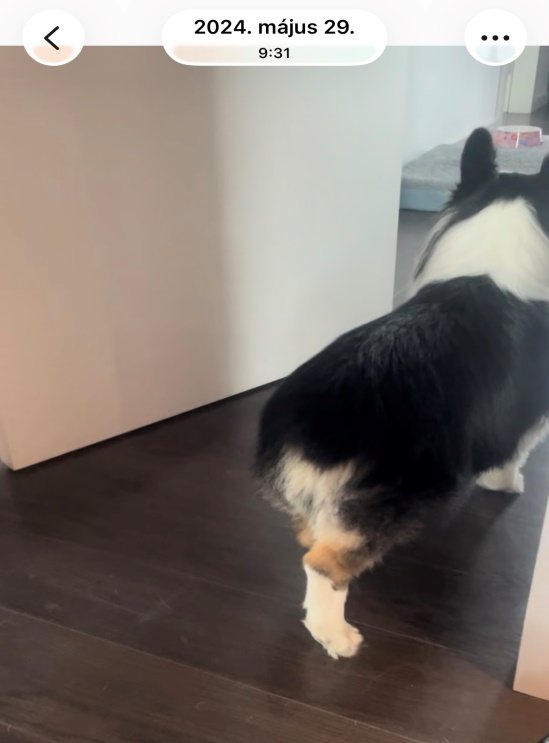
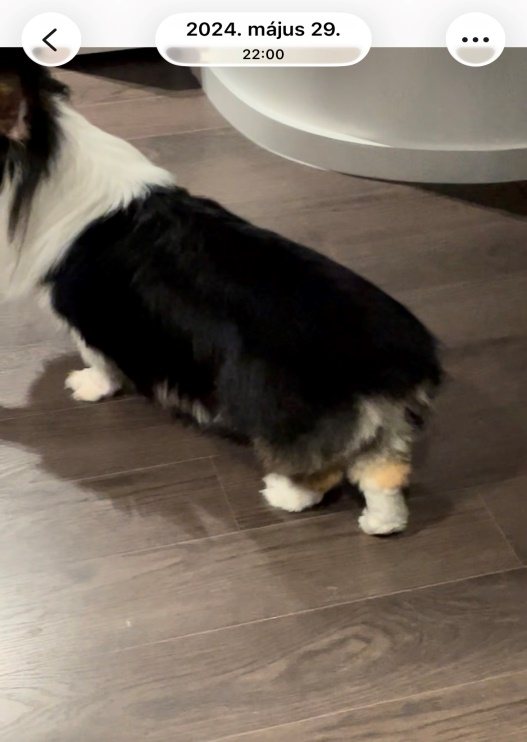
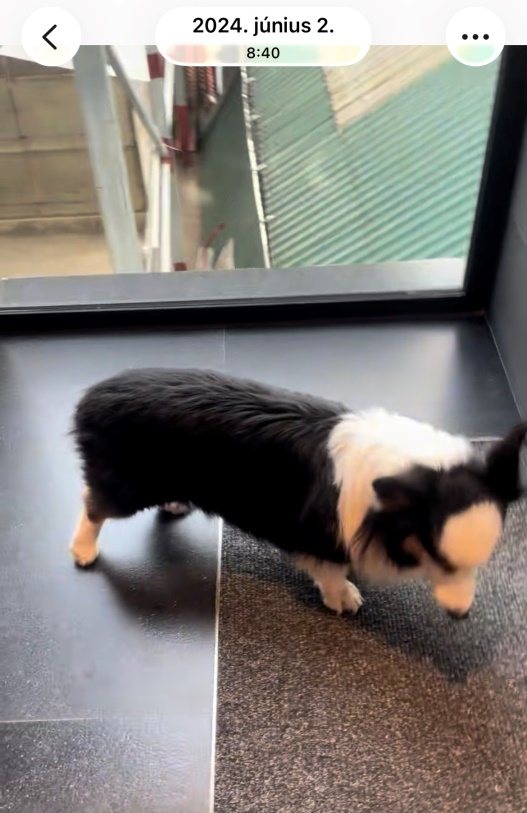
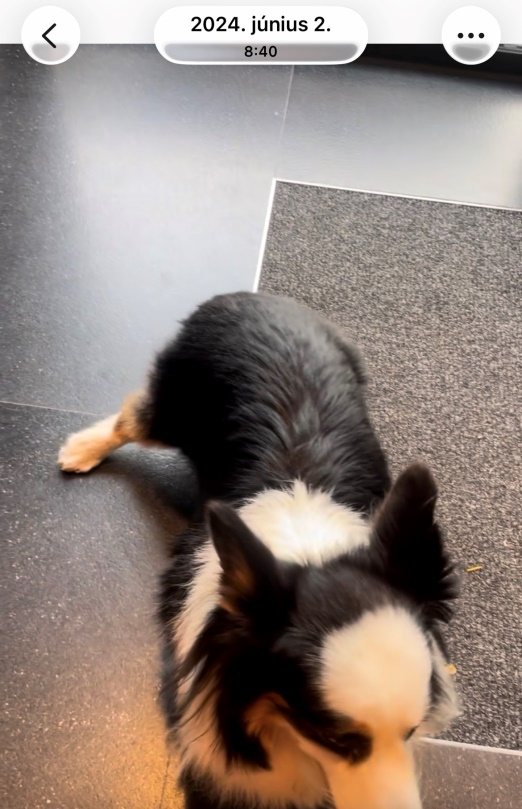
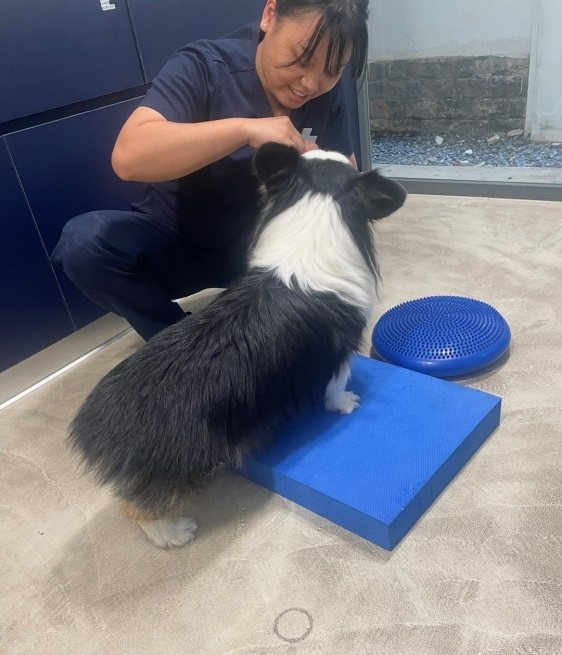
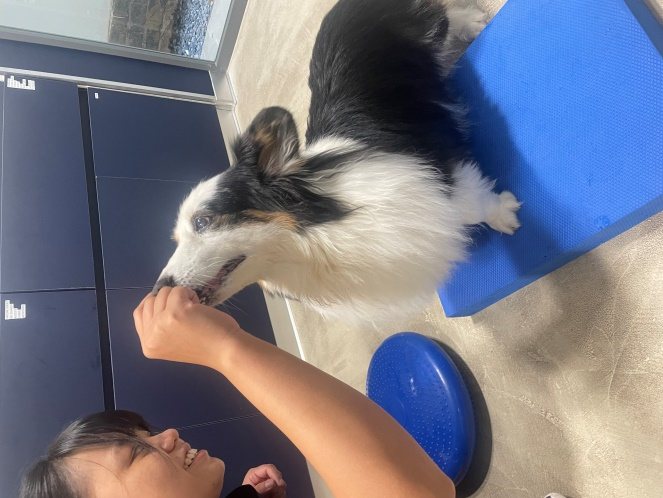
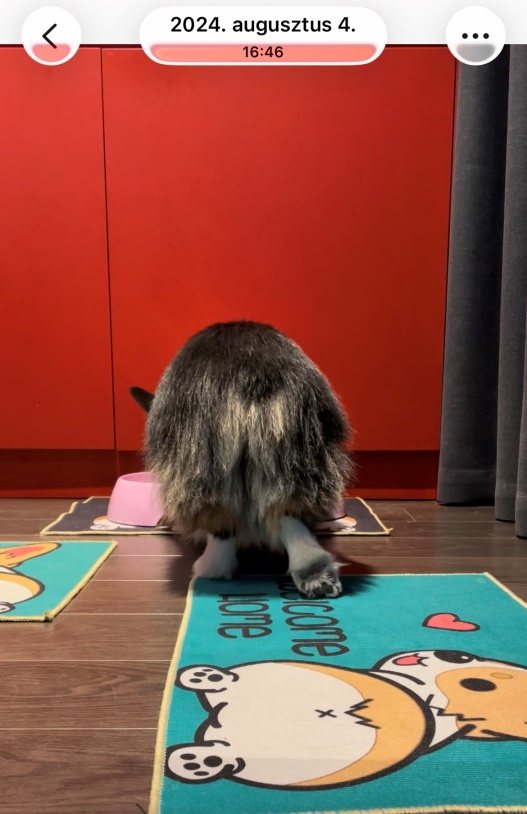
The next symptom, which unfortunately did not stand out at the time, but which I now know is one of the main characteristics of the disease, is when the dog steps on the top of its paw (not on the sole). This was not conspicuous because Opi is a short-legged little dog. In a large-bodied dog the initial symptoms can be much more spectacular. The other very important symptom is that the hind legs cross each other. Usually with the leg where the deterioration begins, she starts to put it in front of or behind the other leg. This already means that the dog loses the spatial perception in one hind leg, the proprioception begins to fail, as if she could not place her leg in space.
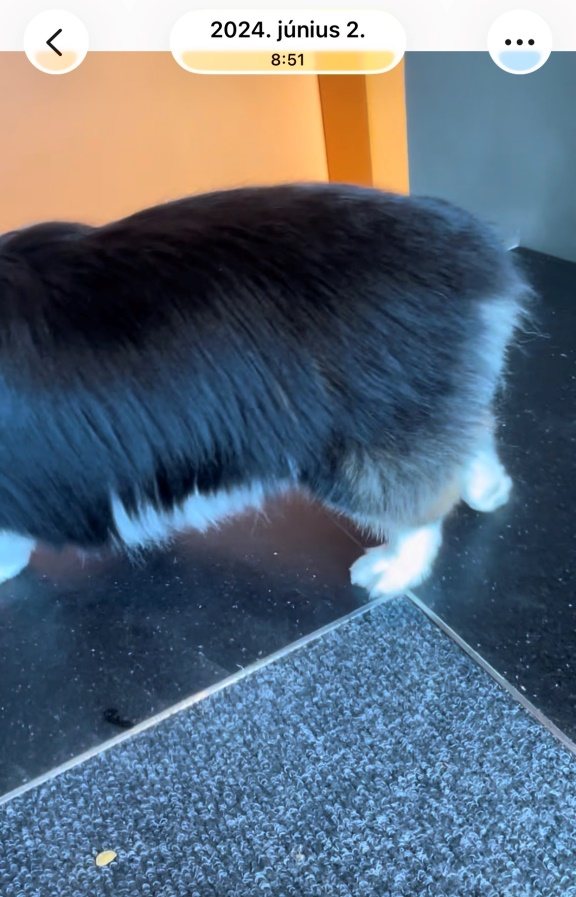
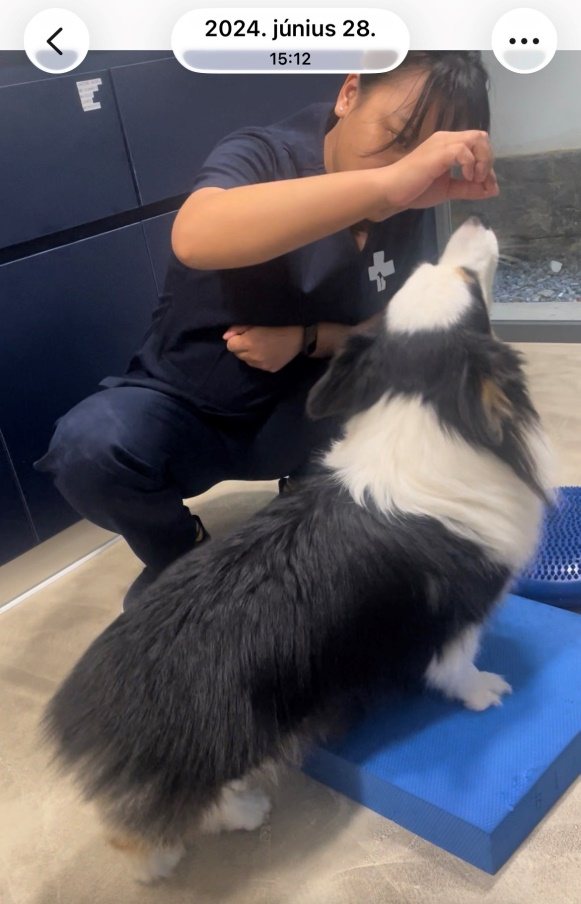
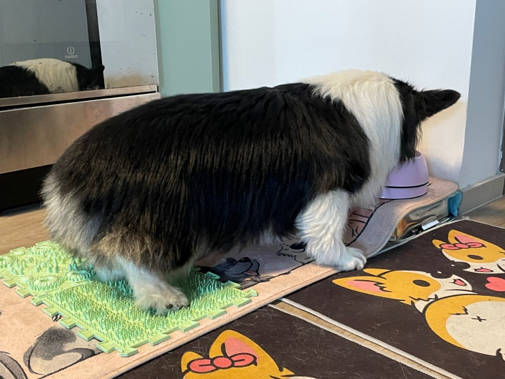
It was noticeable that outside, on the asphalt, Opi walked more easily, but in the flat, in order to make her movement easier, sticky, rougher-surfaced runner rugs and carpets were laid on the slippery surfaces. The best solution turned out to be the doormat rugs also found at the entrances of office buildings. On this surface her leg did not slip out, she was visibly able to move more stably. In this period Opi still ran around in the flat. We went to physiotherapy weekly; she continued to take the Neurontin at a 100 mg dose and the vitamin B complex. Her condition did not improve. She was under regular medical supervision; however, without an imaging examination, the herniated-disc diagnosis established in May remained the most relevant. In Vietnam the veterinary conditions are not really adequate; an X-ray, CT or MRI examination is literally unavailable, but by smuggling the animal into human hospitals at night it can be “arranged” for 1,700 EUR.
Home to Hungary – searching for an answer
At the end of September 2024 Opi and I moved home to Hungary, and our first trip led to the veterinarian. I trusted the Hungarian veterinary care very much, and I very much hoped that here it could be discovered exactly what was wrong with Opi and that they would cure her. (In telling our story I will not write down the name of a single Hungarian veterinarian!) The result of the consultation and manual examination with the veterinarian on 24 September:
Medical record – 24 September 2024 click for the full report
Animal's name: Opi
Breed: dog
Species: welsh corgi pembroke
Sex: female
Medical record data:
[ History ]
Arrived from Vietnam yesterday. Her complaints began at the beginning of May. First she held her leg out, then it began to slide apart. By manual examination, an L5–6 disc hernia was determined. She receives gabapentin, attends physiotherapy. She received Previcox, did not improve on it.
[ Symptoms ]
She reacts to the stimuli of the environment, her consciousness is intact.
Cranial reflexes: The menace, corneal, palpebral and auriculopalpebral reflexes are preserved, there is no anisocoria, no nystagmus. The jaw tone and the tongue are tonic. The pupils react to light.
She shows no pain on lateral bending, extension, flexion or rotation of the neck.
The further spinal segments are not sensitive to pressure.
The musculature of all four limbs is slightly wasted, muscle tone is normal.
Both front limbs: The digit, carpus, elbow and shoulder joints are stable, their range of motion is preserved; during their movement no abnormal displaceability or crepitation can be felt, on passive movement she shows no pain. At the end points of the joints, in hyperextension or hyperflexion, she shows no pain. The range of motion of the metacarpophalangeal joints is adequate.
No increased-tone muscle knot can be felt.
The medial compartment of the elbow joints is not sensitive to pressure, the area of the biceps tendon is not sensitive to pressure, no effusion can be palpated in any joint.
The biceps brachii, triceps, extensor carpi radialis and flexor reflexes are normal, superficial and deep pain sensation is preserved. Proprioception is immediate on both sides.
The hopping test is negative.
Both hind limbs:
Marked ataxia of the hind body.
The digit, hock, stifle and hip joints are stable, no abnormal displaceability or crepitation can be felt, their range of motion is preserved. On passive movement she shows no pain, at the end points in hyperextension and hyperflexion pain cannot be provoked.
In the stifle joints a drawer sign cannot be confirmed, the tibial compression test is negative, on medial rotation of the tibia she shows no pain.
The patella is located in the midline of the stifle joint, cannot be luxated either laterally or medially, sits deep in the sulcus patellae.
The biceps femoris, patellar, tibialis cranialis and flexor reflexes are heightened (more so on the left side); superficial and deep pain sensation is preserved, proprioception has failed on both sides.
During the hopping test the patient does not correct.
[ Comment, treatment recommendation ]
Spinal MRI/CT recommended.
Localisation: Th3–S.
Since the patient has been showing the symptoms for a long time, it is doubtful what improvement we can achieve.
Diagnoses: discopathy
The chest, heart and abdominal ultrasound examination is negative; in the lab result only one CRP protein value showed a higher value, which may indicate inflammation. But apart from this everything was fine.
After this, on 27 September an MRI examination took place, the result of which:
MRI report – 27 September 2024 click for the full report
Imaging report
The shape and alignment of the vertebrae is regular, the end plates are intact. Regular pairs of ribs and 7 lumbar vertebrae are depicted. The intervertebral discs are of reduced signal intensity on the T2 images. The annulus fibrosus is slightly thickened multifocally. Above the L4/L5 intervertebral space, in the spinal canal, minimally and rather on the right side, a partly calcified content can be observed in the epidural space (red arrow), which causes at most mild spinal cord compression. The L7/S1 disc shows a mild dorsal protrusion (green arrow). The nerve tissue is not compressed. No pathological signal-intensity change is depicted in the spinal cord. In the area of the paravertebral soft tissues no abnormality can be observed.
Opinion
• L4/L5 mild disc hernia (extrusion) and mild myelon compression.
• L7/S1 moderate disc protrusion without nerve tissue compression.
• Polydiscopathy
• Suspicion of mild bilateral nephropathy
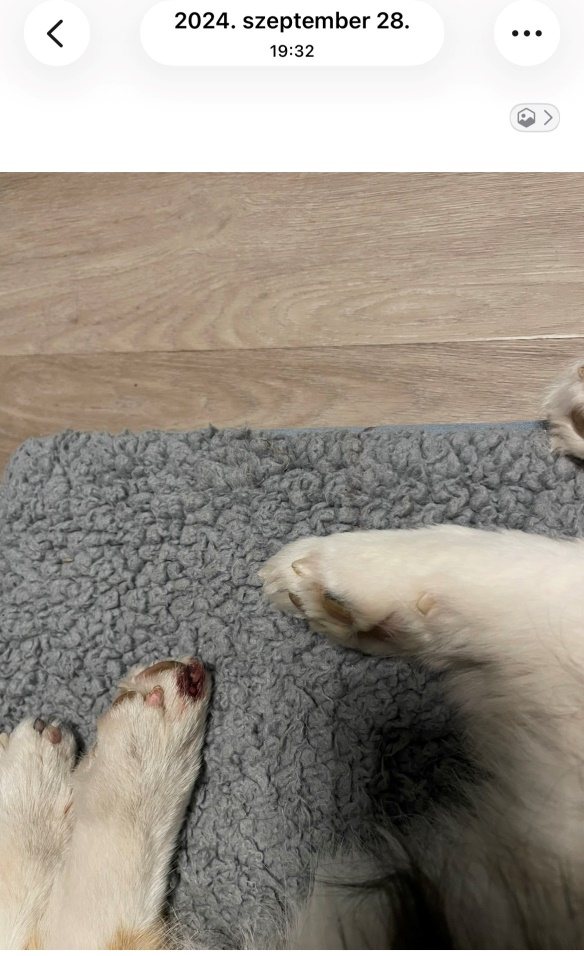
By this time Opi was already dragging her right hind leg, and her claws had worn down and begun to bleed. This we managed to remedy with laser treatment. However, her claws gradually wore down; first on the right, then on the left leg too the severe claw wear became visible.
Then, after this, on 1 October a medical consultation evaluating the MRI result took place, the result of which:
Medical consultation – 1 October 2024 click for the full report
[ Comment, treatment recommendation ]
Physiotherapy, nerve cell regeneration: Dynalode tabl. 1×1; joint-cartilage strengthening (Synoquin small breed tabl. 1×1) recommended!
Consultation in 2 months, if there is no deterioration.
Since the muscle tone is reduced and her intervertebral discs are calcified, a herniated disc may develop in her. This may worsen her condition even acutely.
That is, the MRI examination did not establish the herniated disc; minimal changes are visible on the imaging examination, but these do not explain Opi's symptoms.
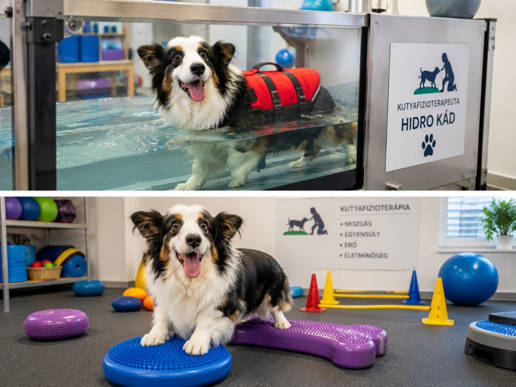
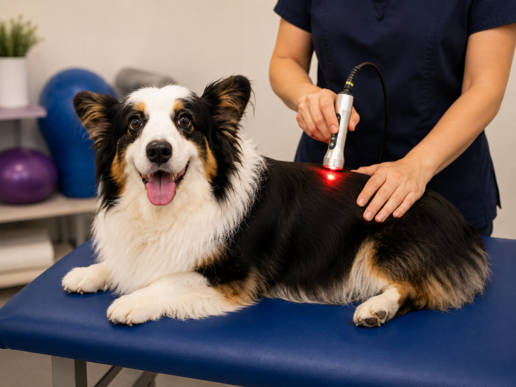
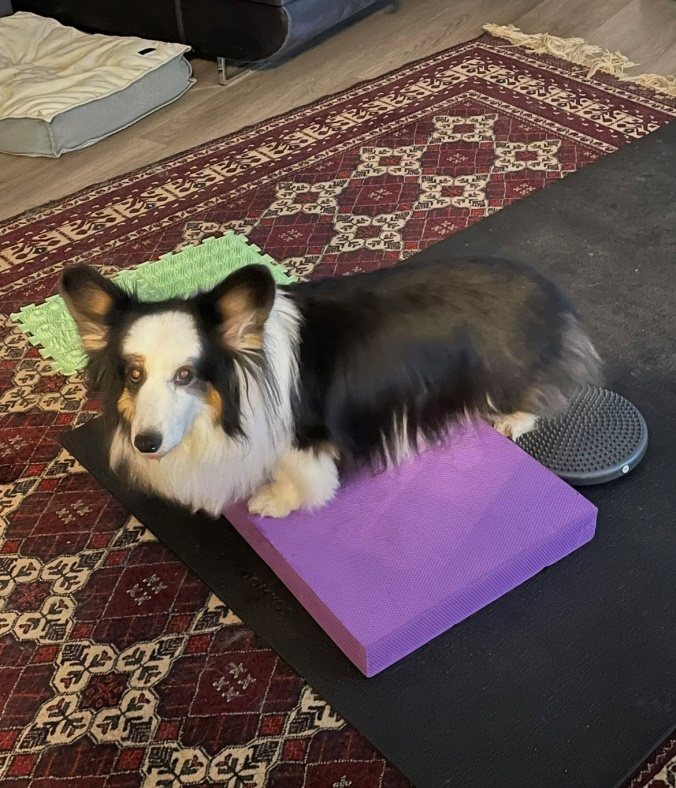
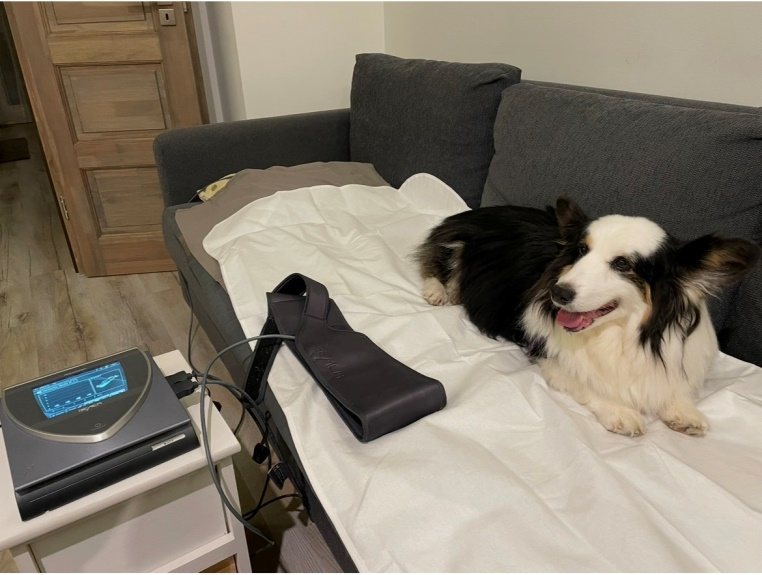
Opi began to take the Dynalode and Synoquin supplements recommended by the doctor. And in addition we sought out a wonderful dog physiotherapist, fully committed to her profession, with whom a condition assessment took place and joint work began at a weekly, 1.5–2-weekly frequency. Here the treatment was remedial exercise, massage, hydrotherapy and laser therapy, as well as the daily performance of the homework assigned for home, for which we often received friendly help too, who also assisted us with the tools and equipment used for carrying out the home exercises. On the suggestion of my friend Eszter I also rented a BEMER bed, about the effectiveness of which I had heard very good things. The desperate owner tries everything to improve the condition of her only little dog. (The physiotherapy pictures are AI-generated.)
Further examinations and the suspicion
Despite the enormous amount of support, therapy and supplements, Opi's condition worsened. Unfortunately at the end of November the annual combined vaccination programme was due, so Opi duly received it. I note here that Opi had received Nexgard Spectra tablets for tick and mosquito protection since the end of 2020. Fortunately, from October 2024 she no longer received this. I only wish I had not had the vaccination given to her then either. If I had known the exact diagnosis, and that for dogs suffering from the disease it is FORBIDDEN!! to administer any chemical substance, she certainly could not have received it.
On 10 December we went for another medical examination, because the fact that Opi's condition was not improving despite all the support – indeed… – would not leave me in peace. At this point Opi could still walk on her 4 legs, but her gait was very unstable, swaying, uncertain.
The result of the medical visit:
Medical record – 10 December 2024 click for the full report
Animal's name: Opi
Breed: dog
Species: welsh corgi pembroke
Sex: female
Date of birth: 24/07/2016
Chip number: 990000005973523
Medical record data:
[ History ]
The use of the hind leg has worsened.
[ Symptoms ]
Marked ataxia of the hind body. Proprioception has failed on both sides. The limbs are normoreflexive.
The spinal column is not painful.
On the front legs no neurological abnormality can be confirmed. The brain and cranial nerves are normal.
[ Comment, treatment recommendation ]
A follow-up MRI (T3–S segment) is worth considering.
Further physiotherapy.
Dynalode tabl. 1×1.
Synoquin medium breed 1×1.
Diagnoses:
- none -
Here something very important happened. Since in the past months it had not left me in peace for a moment that if Opi does not have a serious spinal problem, which would be visible on the MRI examination, then what on earth could be wrong with the little dog. And during the enormous amount of searching and research I came across a terrible disease with a symptom cluster similar to the human disease ALS, the disease of dogs called degenerative myelopathy. What I read about the disease frightened me very much. At this medical examination I asked the doctor whether Opi could possibly have this disease. And the answer was: of course not, she would already have been paralysed long ago in this much time!!!! To the question of whether it is possible to have a test done for this disease, I received the answer that it only exists for German Shepherd dogs, in Corgis there certainly is not one, and anyway degenerative myelopathy is not characteristic of this breed. (If you have read the description of the disease on the website, you can see that the Corgi is the 2nd most at-risk breed among dogs with regard to the occurrence of degenerative myelopathy.)
I calmed down a little, because at that point I still knew nothing about the disease and I believed what the doctor said. But then time passed again, and in January the little dog had a very strange neurotic seizure, about which the doctors likewise had nothing to say. By then I had had completely enough of the Hungarian veterinary care, so I began to research. This is how I came across, at the Department of Neurology of the University of Veterinary Medicine Vienna, the neurology specialist veterinarian Dr. Ákos Pákozdy (our dog physiotherapist also recommended him!), with whom we got an appointment for Opi on 30 January. Her reports so far and a few video recordings of her current condition I had already sent to the doctor in advance by e-mail.
Opi walked on 4 legs, without stumbling or falling, for the last time on 19 January 2025, for about 2–3 minutes. After this, already every 4–5 steps her right hind leg slipped out, she fell on her right knee, held her right leg out and stayed like that for a few seconds, and only after correcting it with great difficulty could she walk on.
Eating and drinking she could now manage only crouching, swaying.
Vienna – the two dreaded words
30 January 2025, Vienna. What I experienced there, at the University of Veterinary Medicine Vienna, is indescribable! Unique in every respect – the environment, the attitude, the cleanliness, that they receive the patient exactly at the pre-arranged time… and that is still not all. The head of department spent 1.5 hours, that is, one and a half hours!!, with Opi. A complete neurological examination; during the meeting he also consulted by phone with several specialists and a laboratory, considered, examined and took into account every possibility. But unfortunately his most likely presumed diagnosis was the two dreaded words: degenerative myelopathy.
The medical record made by the doctor:
Outpatient sheet – Vienna, 30 January 2025 click for the full report
Patient: ''OPI'', Welsh Corgi, female, spayed
Onset of case: 30/01/2025 12:14
History:
With the owner for 4 years – bought at a Vietnamese market, was in poor condition at the time, but got well within weeks.
She was healthy for years, only her teeth had to be treated/removed.
At the beginning of May 2024 a mild gait disorder began. She regularly stretched her right hind leg backwards, and the thoracolumbar region seemed painful. An MR and CT examination of the lower-back spine made in September showed only minimal changes, there was no significant compression.
Since September, despite hydrotherapy and the BEMER bed, her condition is worsening, she can barely stand on her legs.
She takes Neurontin 50 mg twice a day, and the supplements Synoquin and Dynalod. The blood tests so far have not shown significant abnormality.
On neurological examination: severe, barely ambulatory paraparesis; she spontaneously steps onto the back of her paw, her legs collapse, she often “seal-crawls”. The menace reaction is readily elicited, somewhat asymmetric, milder on the right side. Bilateral lens opacity, minimal anisocoria. The patellar reflexes are very weak on both sides, the tibialis cranialis is heightened on both sides. The panniculus is readily elicited. The front legs are strong. On the hind legs the flexor reflexes can be elicited, but are weak. No pain is observed.
In summary:
chronic, progressive, MR-negative thoracolumbar myelopathy
Presumed diagnosis: Degenerative Myelopathy
We sent a blood sample for a genetic test (DM-Exon2); the result will be available in 1–2 weeks.
Physiotherapy can slow the progression, but further progression is, unfortunately, likely.
The use of a wheelchair is worth considering.
And the genetic test performed at the LABOKLIN laboratory (which, according to the Hungarian veterinarian, does not exist!):
Genetic test – LABOKLIN click for the full report
Tierart: Hund
Rasse: Welsh Corgi
Geschlecht: weiblich kast.
Name: Opi
Degenerative Myelopathie - PCR
Ergebnis: Genotyp DM/DM (Exon 2)
Interpretation: Das untersuchte Tier ist reinerbig (homozygot) für den Hochrisikofaktor für DM im Exon 2 des SOD1-Gens.
Erbgang: autosomal-rezessiv
in English:
Degenerative myelopathy – PCR
Result: Genotype: DM/DM (exon 2)
Interpretation: The examined animal is homozygous for the high-risk factor for DM located in exon 2 of the SOD1 gene.
Inheritance pattern: autosomal recessive (that is, inherited from both parents)
And the doctor's description after this:
Dear Owner! Opi carries the gene of degenerative myelopathy (DM). What is more, she is homozygous. This counts as a high risk factor for the development of the disease. On its own it naturally does not prove this diagnosis 100%, but together with the clinical picture it makes it very likely. According to our present knowledge, as we discussed, movement/physiotherapy slows the prognosis, but unfortunately the disease is not curable.
No owner would ever want to see such a report in their life! And that is when the world around me collapsed definitively. The thing I feared most had come to pass. By then I had already read quite a lot about degenerative myelopathy, which is specifically characteristic of Corgis. And I was unable to comprehend that this little dog, who had already suffered so much in her life, should be the victim of such a disease, which, although slowly progressing, is incurable, as a result of which she loses her entire ability to move, her independence, her sweet little-dog self. These are the two words that you never want to hear in your life!
Living with the disease
The following period was spent researching and studying the medical literature dealing with the disease. I read all the professional material, research and surveys available in the world, everything. In connection with this I came across an American Facebook group (Degenerative Myelopathy (DM) awareness group), which deals specifically with dogs sick with degenerative myelopathy, with the participation of doctors, researchers and the owners of the dogs suffering from the disease, for their support. Without the group I would have been completely lost, without a compass, and I think unable to cope with the very sad and cruel process ahead of us. Belonging to the group was an enormous support and help in the different phases of the disease, in interpreting the appearance of unexpected symptoms, in understanding the processes and in knowing what might come after what.
As a result of the day-and-night, 24-hour-a-day searching and gathering of information, I acquired for Opi more or less every supplement recommended by the group, in addition to those she was already taking. Keeping to reason here, of course, because many supplements offer combinations of these in mixed form, so an overdose can easily happen, and this must be watched very carefully. These were vitamin C and vitamin E, Omega-3 (salmon oil), magnesium, and Lion's Mane. And the Neurontin (Gabapentin active ingredient) was gradually discontinued on the recommendation of the Vienna doctor, which, after much study, also turned out to worsen the sick dog's condition, to amplify the symptoms; the dog becomes much more unstable while taking the medicine. And she had no pain anyway…
The first excellent example of how useful this group is was when, from February 2025, Opi began to kick very hard with her two hind legs in her sleep. Of course, dogs often move their legs in their sleep. But this was completely different. At first only a tiny movement, as if she were running in her sleep, but over time increasingly strong, powerful kicks, twitches with the two hind legs. So her little legs, which were half paralysed and ataxic, moved in her sleep like a Texan bull trying to throw the rider off its back at the rodeo.
I sent the video to several veterinarians too and consulted them, but I received no reasonable explanation. When I uploaded the video to the DM Facebook group, within half an hour 50 replies arrived saying that this is:
That is, this symptom indicates a serious deterioration of the condition; the nerve connections moving her legs cease, but the brain still tries.
At this point I bought the dog wheelchair, which unfortunately Opi completely rejected. Neither the blue nor the pink one won her approval.
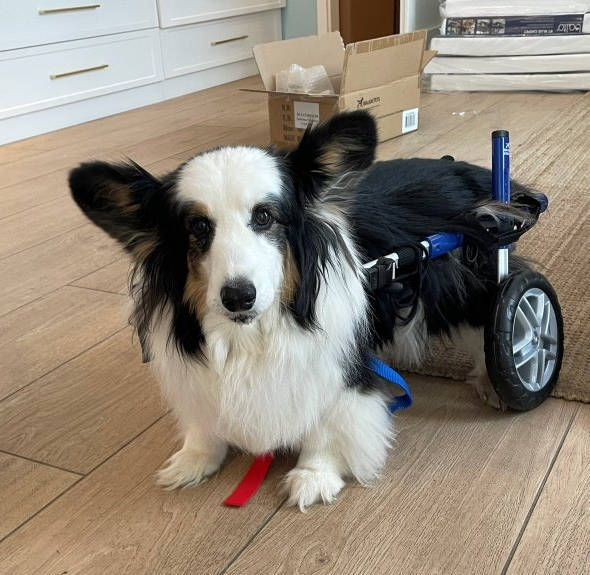
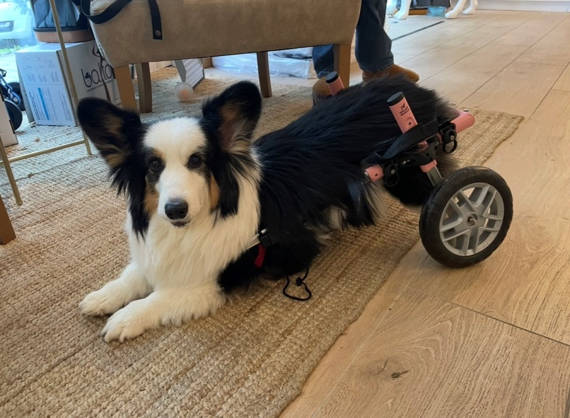
I also acquired a step-corrector, which Opi likewise rejected despite a great deal of expert helping attempts. Not for nothing, Opi is a very stubborn Corgi! So what remained was the lifting harness (called a sling), which can be placed under her belly, and with this it makes the little dog's movement easier, because it takes the load off the front legs. There is also a lifting harness that you slip on at the hind legs and can also fix as a harness at the front legs (under the name Help 'Em Up Harness). Unfortunately this is not so much a solution for a Corgi because of the small body, the long spine and the low legs. As a last resort the choice fell on the dog stroller, which turned out to be the best idea. Opi adored riding in the stroller, and this way I could take her anywhere with me; she missed no programme, outing or entertainment. This little girl adored roaming about.
In March 2025 Opi still walked on 4 legs, but her gait was completely swaying, she kept falling and getting up.
We mostly walked on grassy areas, so that her hind legs would not suffer injury on concrete or asphalt. It seemed that walking on grass was easier for her.
In this period, besides the “kicking” in her sleep, other symptoms also appeared. These appeared alternately, not every day, or sometimes several times a day. Her hind – mainly the worse, that is, the right hind – leg cramps up, stiffens, which only eases with massage and movement. The remedial exercise was in many cases difficult because of this. Besides the stiffened leg, trembling also appeared, as well as the kicking.
Her two hind legs became hypersensitive to touch. Which, by normal common sense, is incomprehensible – how can something that is half paralysed be so sensitive. But unfortunately everyday life showed that this too is one of the symptoms of the disease. On a daily basis I recorded the weather conditions, whether there was a weather-front effect in the weather. For a while I watched whether that caused Opi a deterioration. Because the disease meant that there were better and worse days. What she could still do one day, she could no longer do the next, or what she could no longer do, two days later she could do a little again. A real emotional roller coaster that this terrible disease had put us on. I noticed that in the winter period her condition worsened more, because of the cold. But here, unfortunately, it may also have played a part that in November 2024 she received the annual vaccination series, which is very much not recommended for DM-sick dogs. I would rather attribute the winter deterioration to that. That is, according to my study of the weather fronts, they did not visibly influence her condition.
Summer 2025 – the “seal-crawl” period
By roughly the end of June, Opi no longer stood on her 4 legs. The “seal-crawl” movement began, when she started to pull herself along with her front legs and push with her two hind legs.
For standing on 4 legs to eat and drink she now needed support, and a change also occurred in her barking. Her barking became weaker, quieter, hoarser. This symptom persisted until the end. The characteristic, sharp Corgi bark never returned.
In this condition no deterioration occurred for a longer time. Our summer went very well; Opi very much enjoyed that we got to many places with the help of the “Opi Ferrari”. Of course, in this period too there were better and worse days. On the better days she still moved about in the flat as she could, and could be left at home alone for a minimal time.
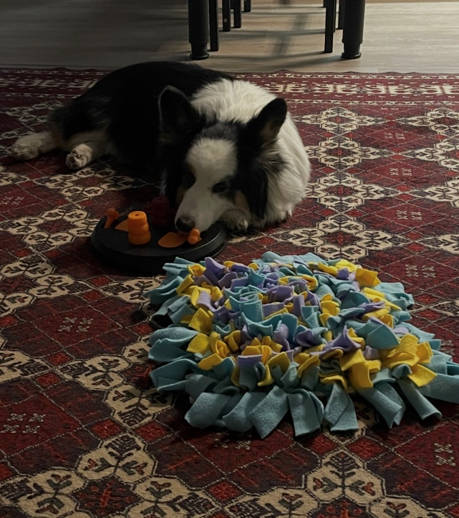
On the worse days, however, Opi mostly did not feel like moving much. That is, she did her business outside, and with that the outdoor activity planned for that day ended for her. So that she would not be bored and her brain would also be tired out, as a home activity a snuffle mat and dog intelligence games were deployed, of course for a treat. With these activities she could be nicely tired out, and she slept well afterwards.
It is very important to mention that in this stage the majority of dogs with degenerative myelopathy begin to lose their ability to retain urine and faeces, they become incontinent. Based on my much study, I noticed that first faecal incontinence occurs, followed by urinary incontinence, but there are dogs in whom it happens the other way around. In Opi's case, fortunately, this did not happen, which counts as a very rare exception, and for which I am very grateful. Despite this, I began to give Opi D-mannose/cranberry powder. To avoid possible urinary tract infections. The twitching of the hind legs was still present even then, but its occurrence was no longer daily, and its intensity also decreased.
Alongside the use of the lifting sling, Opi began to lift her hind leg when peeing. This became a very strange phenomenon, because when we were not yet using this aid, not only did she not lift her leg, but she peed fewer and fewer times. Of course I kept a diary of her general condition and of the occurrence of urine and faeces on a daily basis. This way I could follow what change was occurring in her condition. But because of this phenomenon I thought it worth a visit to see Dr. Pákozdy in Vienna again, the result of which was this outpatient sheet:
Outpatient sheet – Vienna, second visit click for the full report
History: In January we consulted Opi at our clinic; at that time Degenerative Myelopathy was the presumed diagnosis, which was supported by the genetic test we performed, which confirmed the carrying of homozygous alleles on the affected gene. Since February she has not been able to walk. She consumes further supplements: Lion's Mane (mushroom), Vit E, B complex, C, fish oil. Plus: massage, hydrotherapy, laser, BEMER bed. Sometimes there seem to be positive tendencies too, and it appears she is not progressing. The function of the front legs is not deteriorating. Perhaps her voice has changed somewhat. During the neurological examination her behaviour and the cranial nerves show no abnormality. She cannot walk, shows severe paraparesis on both hind legs, with some asymmetry, her left leg is stronger. Even if we stand her up, she is unable to hold her body weight, she collapses on the hind legs, falls on her knees. The patellar reflexes are very weak on both sides, almost absent. The tibialis cranialis can be elicited. The panniculus is readily elicited. On the front legs no pathological reflex or proprioception deficit can be confirmed. On the hind legs the flexor reflexes are severely weak. The perianal reflex is normal. Summary: Degenerative Myelopathy (DM); since January the paretic symptoms have worsened. An MRI and CT examination may be considered, so that the differential diagnoses can be ruled out again with great certainty, but the reports so far fit the DM disease best.
That is, we could subject the little dog to an MRI/CT examination, for which she would have to be anaesthetised, in order to rule out everything else again… I did not want to take this on, because the risk of the anaesthesia might have been much greater already in this condition. What was encouraging was that Opi's front legs were still in good condition. At this point the doctor said that in his opinion we might still have a year together, because Opi receives all the support and help for maintaining her condition.
Autumn and winter 2025
What became noticeable in the autumn of 2025 was that during our times outside Opi was willing to move less and less. Because of this she also peed less and less (1 pee per time outside). To solve this we began to use the lifting harness called the “sling” in every case, which was an enormous help. I took Opi out 4 times a day for a health “walk”, every 4 hours. With the help of the sling lifting harness she could move more easily, so she could also pee more times during one time outside (2–3×), because she did not have to hold and drag her hind end herself. By this point she could not move about at home either; there was no longer any surface even in the flat that would have made moving easier for her.
In the period that followed, several changes occurred in her condition. The first was that the panting became constant, which until then I had only thought was because of the warmer weather. But with the arrival of autumn the panting remained just the same, day and night. Only the use of the air conditioning or a fan could help with this. In addition, a strange anxiety appearing in the afternoon, at nightfall, appeared in the little dog, of which there was never any trace during the day. As it began to get dark earlier, and from then on, in many cases until 2–3 a.m., in periods of various lengths, periodically, when she could not sleep, Opi was anxious, restless, agitated. This is when I began to give her the CBD oil recommended specifically for dogs.
Another change was that until then Opi could still sit, hold herself up with her two front legs, but by around the end of November she now needed full support to move, and could no longer even sit, could not hold herself up with her two front legs. She just lay down, because her front legs were no longer strong enough to hold her body. With the help of the “sling” harness, however, Opi was “forced” to move, so that we would not let the muscles of her front legs waste away. In this condition physiotherapy unfortunately became irrelevant; we were at hydrotherapy for the last time at the end of summer / beginning of autumn (already with minimal success, only with the therapist's help, by lifting her hind leg). Her two hind legs alternately stiffened, cramped up, or were so hypersensitive that they could barely be touched.
Massage and laser treatment there were still on a few occasions, and home mobilisation, massage and gel warming were a daily thing. But I no longer wanted to expose the little dog to any kind of stress situation; for her physical and mental state the safety of home was best, and our favourite green area, where she very much liked to spend time. At this point she could still roll about so that she could turn completely over from one side to the other. Unfortunately, a few months later she could no longer do this.
I was very afraid of the increasingly cold weather, and then of the snow falling, of how we would manage our times outside and how her condition would worsen in the winter. Fortunately, in the snow that lasted for several weeks we could move very well with the help of the sling.
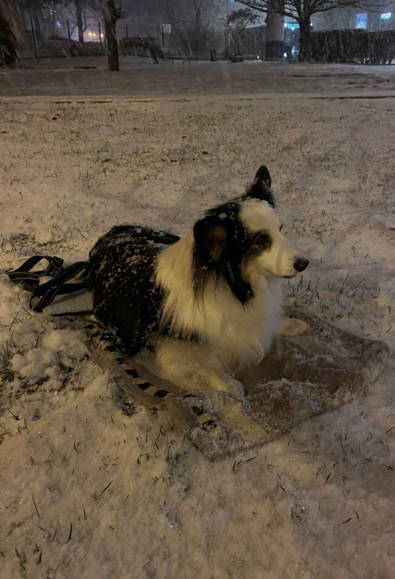
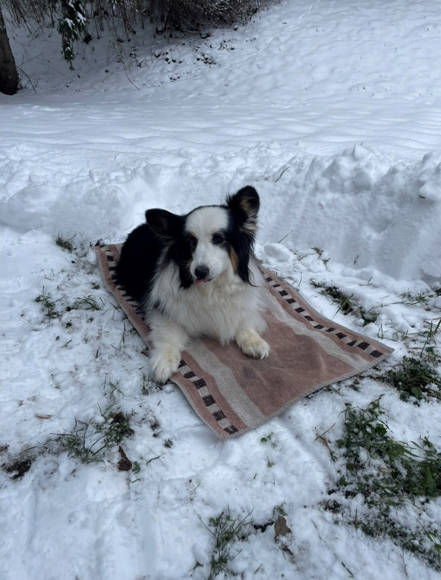
It seemed that the cold also did Opi good; her condition did not visibly worsen, and the panting also eased in the cold weather. This period passed “without event”; indeed, in February there was a strange phenomenon, when I scratched Opi's ear and with her by-then paralysed hind leg she made scratching movements, as if she wanted to scratch her ear.
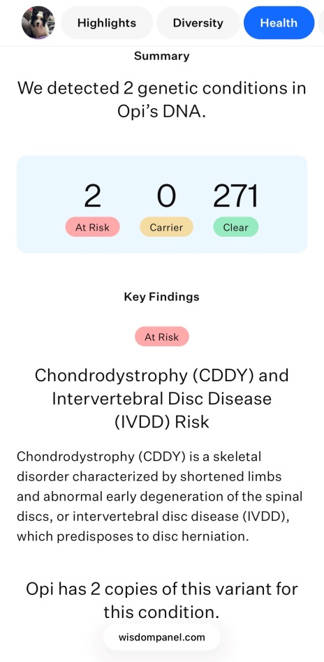
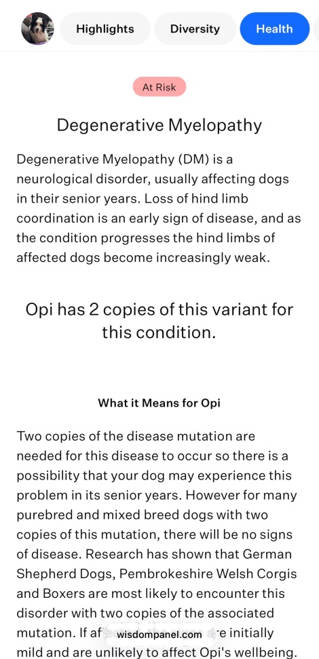
So in February 2026 I made an appointment for a neurological veterinary examination and had an online-orderable DNA test done, the Wisdom Panel, which produces the result based on a sample taken from saliva, which in Opi's case was double-gene for IVDD and double-gene for DM as well…
The last months
During our visit to the neurological veterinarian, the possibility was established that Opi, besides the DM, might also have a peripheral neuropathy, which could explain why her front legs are also weakening already, which in fact should not yet be weakening this much. At this point Opi could no longer hold herself up with her front legs; without help and support she could only lie down; the menace reflex had also failed on the right side, that is, it was presumable that perhaps the disease was already causing a problem in her head and face as well, especially on the right side. At the hind leg the weakening began on the right side, that is, as the disease progresses the symptoms and the weakening process are characteristic on the right side of the body, followed by the other side with a small time difference.
The results, of course, again completely devastated me, even though nothing could really change anything anymore. We continued everything as before; only what was comfortable for Opi, what she felt like, what she found joy in, happened to her. To the story I must add that Opi, since October 2024 – apart from 1–2 hours every couple of days – was never left without supervision. And since October 2025 I spent every second beside her non-stop, after she could no longer even go to her water, so I just sat beside her on the floor all day, watched her breathing; if she woke and nudged me, I knew she was thirsty, I brought her water, 4 times a day I took her out into the open; if she felt like it she went a little, if not, then she just sniffed in the fresh air. We drove, I pushed her in her stroller, we went out for lunch; she adored roaming, so I only went where I could take her too. Nowhere without her! As unemployed, I was able to do this, and for this I will be grateful until the end of my life, that I could do this and could spend every second with her. A dog in such a condition MUST NOT be left alone; she became more and more uncertain as her condition worsened, she did not feel safe; if she did not see me for even 2 seconds she already whimpered; if she is thirsty she can no longer drink because she cannot move, she is anxious, and the stress only worsens her condition further. There was no question that nothing and no one else matters, only her comfort and safety. And for her, safety was that I sat there beside her, so that when she wakes she would not have to search, would not have to worry that she might have been left alone. And I gave her this. Because she is the most important.
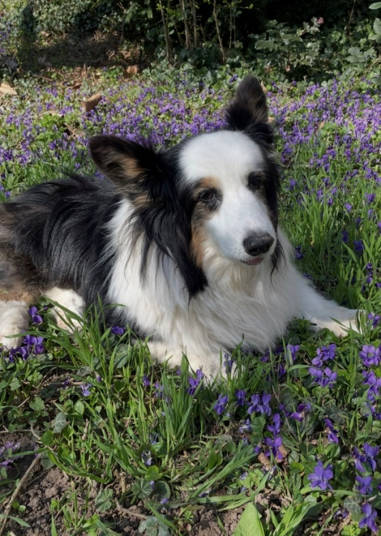
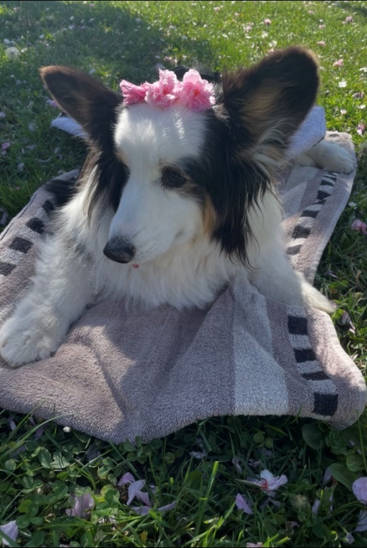
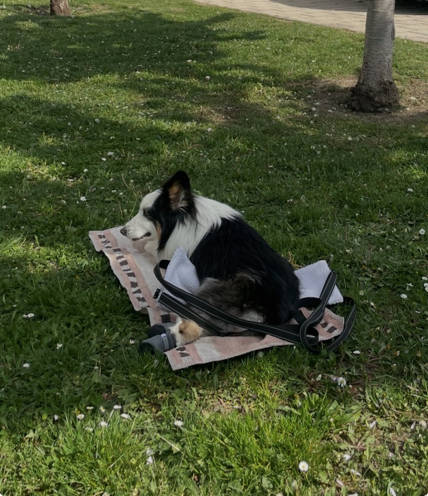
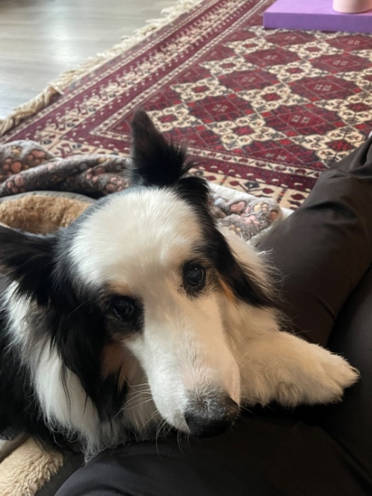
Unfortunately, in the following period everyday life became more and more difficult, and in Opi a new symptom – her tongue staying out to the right side and the dropping of her jaw – also became more and more noticeable.
On 12 March I made the first call to a kind veterinarian friend of mine, that unfortunately from now on daily monitoring is necessary and one must prepare for every eventuality. Unfortunately, from the discussions with the veterinarians it turned out that the next symptom would presumably already be the breathing and swallowing abnormality, so that I now had to follow it every day, every hour of it. By mid-April this moment too came; unfortunately Opi began to breathe no longer from the chest but visibly from the flank.
But her spirits and her appetite roughly remained, with the difference that she now slept much more. But even then she was never left alone, I always sat beside her by her bed. Opi even then was neither urine- nor faeces-incontinent; only on 1–2 occasions did an accident happen at night, but she could hold her urine throughout. With the help of the lifting harness, fortunately, during the times outside she always did her business, even on our last morning. In the last 1.5 weeks we had to talk several times about the end-of-life decision. I kept pushing the date back... because the little dog was still fine in her head. She ate and drank. And she even playfully tried to “roll about”, but her little limbs no longer moved. The last video, which I made on 29 April, in which Opi still, with complete happiness, digs at her little bed.
And we still went for a drive, went for ice cream… then on the morning of the 3rd day after, the little dog had a strange seizure and after that her condition remained very bad. Then I called the veterinarian to say that unfortunately it seems the time has come… The cruellest phone call an owner can make. For the next morning we agreed that they would come to our home and accompany the Princess on her last journey in the most dignified way. On that Saturday, in the afternoon, she was terribly restless, her breathing was panting and fast. She hardly slept at all all day. But she still ate her dinner, and we still slept together, for the last time. And I only asked of her that she sleep calmly through the night. The night lasted until 5 a.m., when we still went out, she did her business, as she always had. But she no longer accepted her breakfast. And then I clearly felt that she was already prepared, and I knew that I had made the best decision the day before. Because she had already become very, definitively tired. And that Opi would now go… And Opália got her Angel wings back.
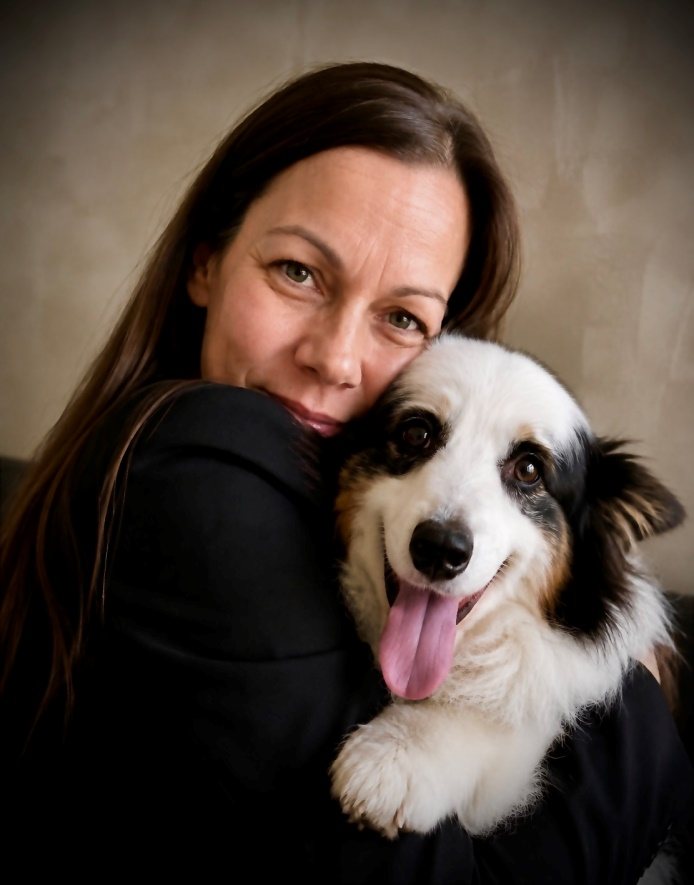
(– 3 May 2026)
🕊️ About the farewell, the hardest decision and anticipatory grief I write on the Anticipatory grief page. If your dog is also living with this disease, perhaps you will find comfort there.